
Growing Participation of Nepali Speakers in American Politics

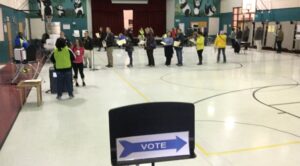
As the November 3 U.S. elections approach, several American citizens of Nepali origin are running for public office in different states. These candidates include Harry Bhandari and Satish Chapagain in Maryland, Sarahana Shrestha in New York, and Bishwa Bahadur Shah and Ricky Shrestha in New Hampshire. They are not running against one another; rather, they are competing in separate electoral districts against other local candidates.
Satish Chapagain is running for the position of State Delegate in Maryland’s 7A District. Similarly, Bishwa Bahadur Shah is seeking a seat in the New Hampshire House of Representatives from District 41 in Hillsborough County. Both Chapagain and Shah have backgrounds in social service and journalism.
Bishwa Bahadur Shah: From Journalism to Politics
 Bishwa Bahadur Shah is running for the New Hampshire House of Representatives from District 41 for the first time. Located in Manchester, the district encompasses Wards 2, 4, 5, and 7. Three state representatives are elected from this district. The general election features candidates who emerged from the Republican and Democratic Party primaries, with three candidates from each party. The three candidates who receive the highest number of votes will win seats, regardless of party affiliation.
Shah secured the Democratic nomination by winning his party’s primary. In the previous election, Democratic candidates won all three seats in the district, receiving approximately 7,000 votes compared with 5,000 for Republican candidates. With approximately 41,000 registered voters, the district appears to favor the Democratic Party, although the outcome of the upcoming election remains uncertain.
Shah has made collaboration with the local community on education, healthcare, and housing a central part of his campaign.
In this land of dreams and opportunities, Shah has pursued several professions, including working as a taxi driver, insurance agent, and real estate agent, as well as operating a Subway sandwich shop franchise. He has also been involved in publishing Nepali Khabar (Nepali News) and participating in various social activities.
“Running a small business in a big city is difficult,” Shah says. “I understand the challenges that small business owners face, and I want to advocate on their behalf.”
Hard work, integrity, and professional experience have helped Shah reach where he is today. He believes that many American families are working harder than ever but still struggle to make ends meet. He also points to the significant share of income that working people pay in taxes.
Reducing the financial burden on working families, expanding employment opportunities for young people, and ensuring adequate support for senior citizens are among Shah’s key priorities as a Democratic candidate.
He hopes his election will encourage the Nepali-speaking community to become more actively involved in mainstream American politics.
After serving in the Nepal Army for 15 years, Shah immigrated to the United States in 2002.
Satish Chapagain: Putting People First
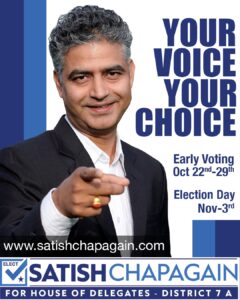 Much like the sentiment expressed by the great Nepali poet Laxmi Prasad Devkota, who urged people to set their sights high-as if to touch the moon-poet and journalist Satish Chapagain arrived in this land of dreams and opportunities more than two decades ago.
A poet at heart, Chapagain recognized the potential to make a meaningful contribution while navigating the opportunities, challenges, and complexities of American society. Seeing opportunities to make a difference in business, employment, and politics, he chose the path he follows today.
In the upcoming U.S. election, Chapagain is running for Maryland State Delegate in District 7A. As a social activist, he engages with voters in Perry Hall, White Marsh, Kingsville, Middle River, and Bowleys Quarters. These communities face challenges such as the rising cost of living, underfunded schools, and roads in need of substantial investment.
His guiding principle is simple: “Not about me, but about us.”
Chapagain envisions a future in which every child receives an excellent education, every senior citizen receives proper care, and every family has the opportunity to thrive.
Having called Baltimore County home for more than two decades, why has Chapagain decided to run for office? He explains:
“Public service should be about the people, not about politics. Every day, I meet neighbors who work incredibly hard yet feel as though Annapolis has forgotten them. Parents are concerned about school funding, seniors are living on fixed incomes, and small business owners are struggling with delays.
“I have dedicated my life to helping my community, and I know we can do better. As your representative, I will ensure our voices are heard at the table, fight for the resources our district deserves, and never stop putting people first-always prioritizing the well-being of our community.”
Chapagain’s campaign focuses on improving the quality of life for hardworking families, making everyday expenses more affordable, ensuring neighborhood safety, supporting small businesses, and strengthening healthcare services and schools.
He also urges voters to recognize the importance of participating in the election and supporting candidates who share their priorities.
“Don’t look back tomorrow with regret-either for missing the chance to be part of Satish’s success, or for realizing that your small contribution could have been the difference that helped him succeed.”
Maryland’s District 7A is a two-member district. Democratic candidates Chapagain and Lydia Jinjen Brown are competing against incumbent Republican Delegates Ryan Nawrocki and Kathy Szeliga. Given the district’s electoral dynamics, candidates from different parties could win the two seats.
Harry Bhandari: Seeking a Third Term
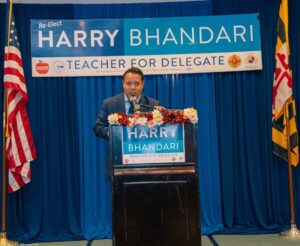 Harry Bhandari has been actively involved in mainstream American politics and has served as a Maryland State Delegate representing District 8 since 2019. He is seeking a third term in the upcoming November 3 election.
Bhandari has centered his campaign on the theme of building-a stronger future for himself, his constituents, and the state of Maryland as a whole. He has pledged to work alongside state leaders and local residents to build a stronger and more inclusive future.
His key priorities include expanding access to education, ensuring quality healthcare, protecting senior citizens, and making housing more affordable and accessible.
In 2024, Bhandari ran for the U.S. House of Representatives in Maryland’s 2nd Congressional District but was unsuccessful.
Sarahana Shrestha and Ricky Gurung
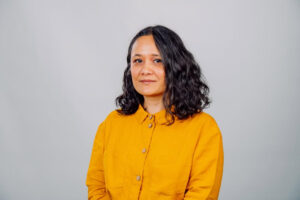 Sarahana Shrestha has also established herself in mainstream American politics. She has served as a New York State Assembly member representing District 103 in the Mid-Hudson Valley since 2022. She is now seeking a third term in the Assembly, where members serve two-year terms.
Ricky Gurung, who is of Nepali origin, is running for the position of State Representative in New Hampshire. His electoral district includes the towns of Hooksett and Dunbarton.
In addition to these candidates, approximately half a dozen other Nepali speakers are serving as elected officials in municipalities and cities across the United States.
What makes it easier for voters in American elections is that early voting begins around 3 to 4 weeks before the final election day. Voters can vote at their local libraries or other designated local government buildings, educational institutions, and public places that are easily accessible to citizens, as designated by the election office. Early voting has already begun in most states for the upcoming election on November 3 and will continue until October 31.
In the meantime, many voters participate in the voting, and the remaining voters vote on election day. The current total number of voters in the United States is about 2.1 billion. In previous elections, 60 to 70 percent of voters voted, and about 50 percent participated in the early elections.
The growing participation of Nepali speakers-including those of Bhutanese origin-in American politics reflects an increasing engagement with the country’s political institutions. Their involvement offers opportunities to bring community concerns into public debate, strengthen civic participation, and encourage future generations to take a more active role in American democracy.